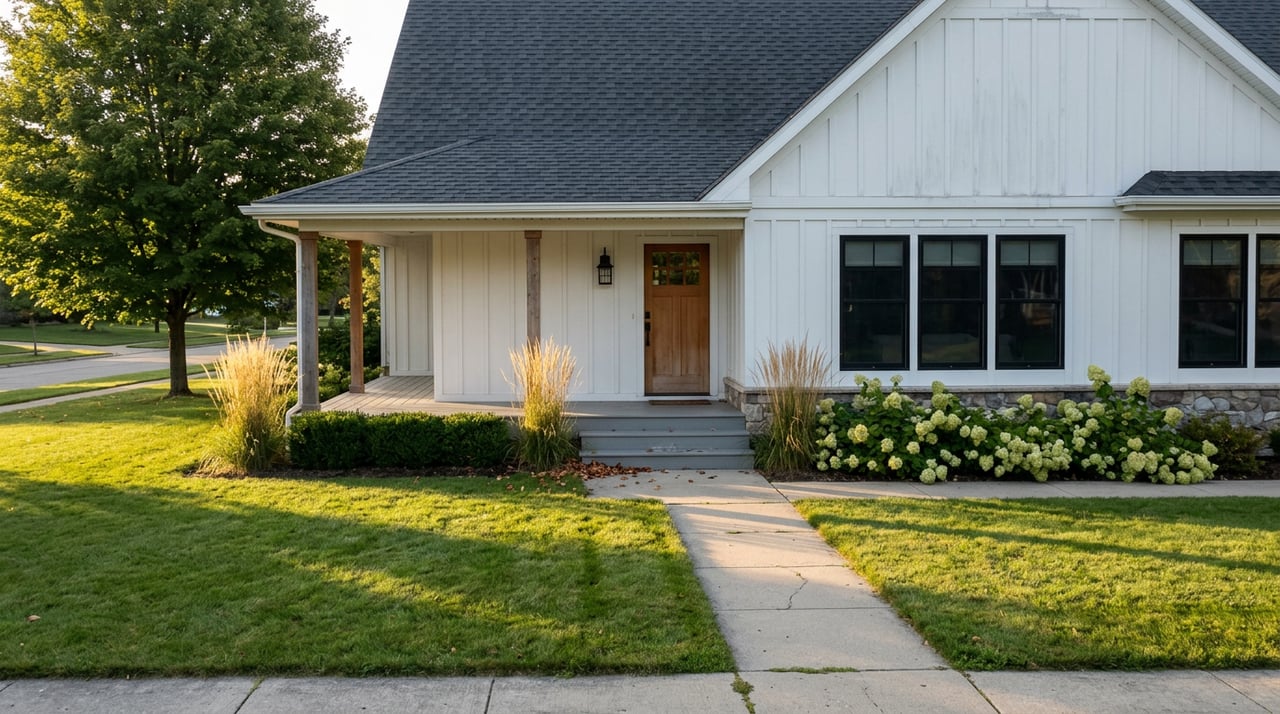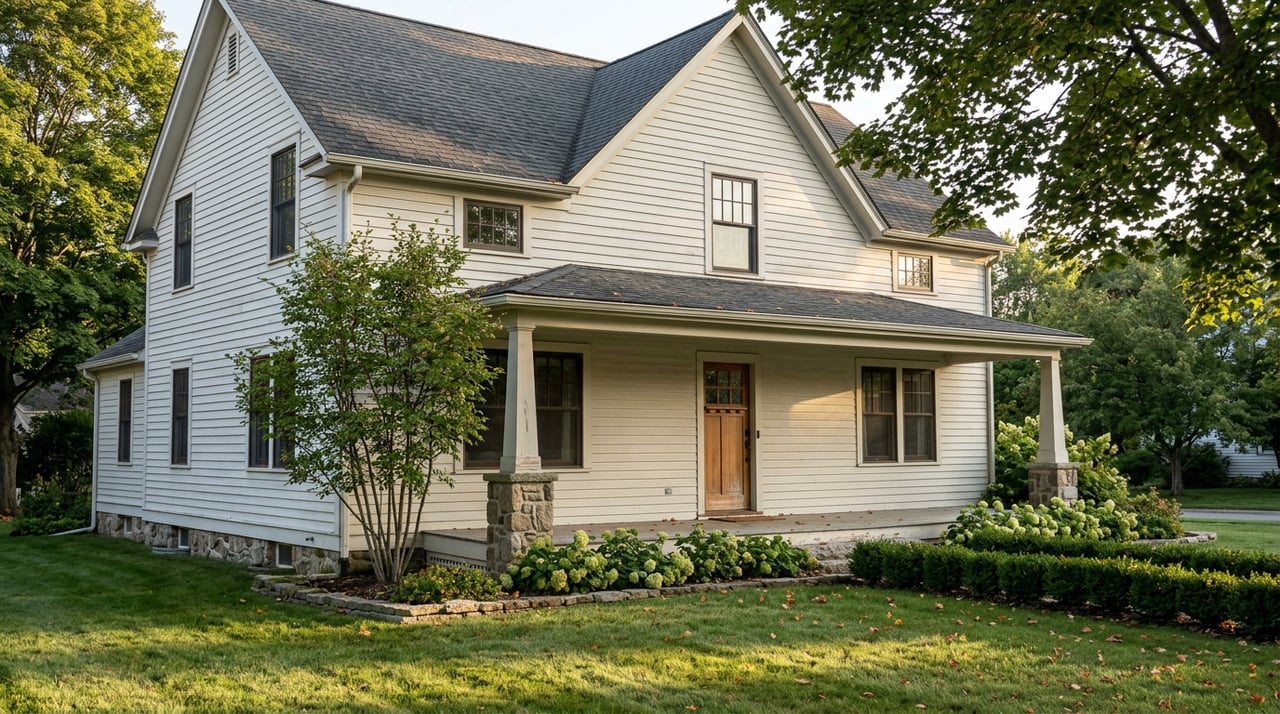
A buyer calls her broker the week she's supposed to remove conditions. The home is on Waterloo Row, gorgeous bones, hardwood that's outlasted three generations of owners. The broker asks one question: what year was it built, and has the wiring been touched? Silence on the other end. Two days later, the insurer says no. Not "higher premium." No.
That phone call happens more often than people expect on Fredericton's older streets, and it has nothing to do with the price you offered or the condition of the roof shingles. It has to do with a decision someone made in 1948 or 1968 that nobody thought to mention on the listing sheet.
The Range Nobody Warns You About
Fredericton doesn't have one housing stock. It has several, stacked on top of each other by decade. Downtown and Southside streets like Town Plat, Waterloo Row, and parts of Barkers Point carry homes pushing close to two centuries old, with some downtown properties dating back to the 1840s, sitting a few blocks from subdivisions built last year. Nashwaaksis, across the river on the north side, carries its own mix of older and newer construction. Drive fifteen minutes and you go from a house older than the streetlights on its block to one with a heat pump and a smart panel.
That range is part of what makes Fredericton's older neighborhoods so appealing. It's also exactly why the same due diligence checklist doesn't work on every street. A home inspector working a heritage property on Waterloo Row is looking for entirely different failure points than one walking through a 2015 build. If you're shopping across that range and using one mental checklist for all of it, you're going to miss the thing that actually stops your closing.
What's Actually Behind the Plaster
Here's the part sellers sometimes forget and buyers rarely ask about early enough: a renovation doesn't mean the electrical got touched. A kitchen redone years ago can still sit on the same knob-and-tube branch wiring that was there when the house was built, because a renovation updates what's visible, not necessarily what's behind the wall.
Pre-war and early post-war homes around Fredericton commonly carry one of three electrical setups that make insurers nervous: original knob-and-tube wiring, a 60-amp panel that was standard decades ago and isn't anymore, or aluminum branch circuits added during a 1970s update. None of these mean the house is dangerous. They mean an insurer is going to ask questions before binding a policy, and the answer to those questions can take longer to produce than a typical financing condition window allows.
Knob-and-tube in particular is where deals stall. Some insurers decline outright. Others will cover the home once a licensed electrician confirms the system's condition, sometimes at a higher premium. A full rewire on an older home commonly runs somewhere in the seven to fourteen thousand dollar range depending on size and access, which is a number worth knowing before you're three days from your condition deadline, not after.
Aluminum wiring is usually more workable. It's often insurable once a licensed electrician confirms the connections were properly terminated. But "usually workable" still means someone has to check, and that someone can't be you standing in the basement guessing based on wire color.
Between running Mayflower Contracting alongside her real estate work, Megan has walked enough of these basements to know the pattern: the wiring that stops a deal is almost never visible from the open house. It's behind the panel cover, in the attic, or wrapped around a joist nobody thought to photograph.
The Pipe the City Doesn't Own
Wiring gets the headlines, but the sewer lateral is the other quiet dealbreaker on Fredericton's mature streets. The city maintains the main line under the road. It does not maintain the pipe running from that main to your house. That's yours, and on streets like Town Plat, Waterloo Row, and Barkers Point, where mature tree canopies have had decades to work at old clay or cast-iron pipe, root intrusion is common enough that a sewer scope belongs on the inspection list, not as an optional add-on.
A scope is a camera run through the lateral before closing. It tells you what's actually happening in a pipe you can't see from the sidewalk, and it gives you something concrete to negotiate with if the news is bad, or the confidence to move forward if it isn't. Skipping it on an older Southside property isn't cautious. It's a coin flip you didn't need to take.
Run This Before You Waive Anything
If you're making an offer on a home built before roughly 1970 anywhere in Fredericton's older neighborhoods, this is the order that protects your closing date:
- Get the year built and any known renovation history from the listing before you write the offer, not after.
- Book a home inspection that includes thermal imaging, which catches wiring and moisture issues a visual walkthrough misses.
- If the home is on an older street with mature trees, add a sewer scope. It's a separate line item, and it's worth it.
- Call your insurance broker with the wiring type, panel age, and any heating oil tank age while you still have your financing condition open. A same-day or next-day answer is normal. A week of silence is a warning sign.
- If anything comes back unresolved, use your condition period to get a written quote for the fix, not just a verbal ballpark, so you know what you're actually negotiating.
That sequence takes a few extra days. Losing a deal a week before possession takes longer than that, and costs more.
Cross Town, and Different Rules Apply
Here's where the range works in your favor instead of against you. If you're looking at newer construction in West Hills or a subdivision like Skyline Acres, none of the above is your problem. Those homes come with modern panels, PVC or ABS drainage, and municipal sewer connections built to current code. The inspection conversation shifts entirely, toward grading around the foundation, attic ventilation balance, and whether the HVAC system was commissioned properly rather than just installed.
Radon testing is worth doing regardless of era. It's invisible either way, and testing before closing gives you a number instead of a guess.
None of this means older homes are a worse buy. Plenty of buyers want the ceiling height, the trim work, and the walk to downtown that a 2015 build can't offer. It means the due diligence has to match the decade the house was built in, and that match is where most of the late-stage surprises come from.
A Short FAQ
Can I still get insurance on a home with knob-and-tube wiring in New Brunswick? Sometimes, after a licensed electrician confirms the system's condition, and often at a higher premium than a modern panel would carry. Some insurers decline outright. This is a call your broker needs to make with specifics in hand, not a guess.
Who pays for a sewer scope? It's typically arranged and paid for by the buyer as part of the inspection process, similar to how a standard home inspection works. On an older Southside street, treat it as part of the base inspection cost rather than an optional extra.
Does any of this apply if I'm buying new construction? Not in the same way. Newer builds carry their own inspection priorities around grading, ventilation, and HVAC commissioning, but wiring type and sewer laterals generally aren't a concern on recent construction.
If you're weighing a character home on one of Fredericton's older streets against a newer build across town, the honest version of that conversation matters more than the listing photos. That's the conversation Megan Gallant has with buyers before an offer goes in, not after a broker says no. If you're at that stage, let's talk.